Showing posts with label Soft Rock. Show all posts

Thursday, February 17, 2022

Top 40 Entry 1/1/72: The Partridge Family —“It’s One of Those Nights (Yes Love)”

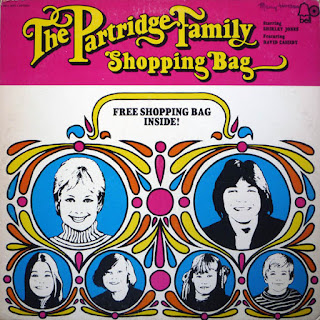
The Partridge Family Featuring Shirley Jones Starring David Cassidy —“It’s One of Those Nights (Yes Love)”. Bell 45160. Top 40 debut: 1/1/72. Peak date: 1/29/72. Written by Tony Romeo. Produced by Wes Farrell. B-side: “One Night Stand.” LP: Shopping Bag. Charts: Billboard Hot 100 (#24), Easy Listening (#2).

Strangely enough, the Partridge Family’s “It’s One of Those Nights (Yes Love)” came and went—peaking in late January ‘72—before its supporting album ever reached stores in March. It was in March, too, when the episode featuring the TV family’s single finally aired (“The Partridge Papers,” about sister Laurie’s stolen diary). It seems like a better synchronized push might have helped it.

What’s significant about this song, though, is that it peaked at #20 on the pop charts, but climbed to #2 on the easy listening charts. This was their most lopsided and therefore most revealing teenage vs. adult audience ratio yet. In spite of David Cassidy and company's so-called bubblegum appeal, the music, in sound and sales tactics, never wavered from targeting the buying power of the mom and dad demographic. None of their music really raged with the kind of adolescent libido that even the Osmonds could summon, and the chart performance of “It’s One of Those Nights” puts this reality into sharp focus. You always wondered why only adults seemed to attend their TV supper club music segments, right?

Partridge staff writer Tony Romeo gets sole credit for “It’s One of Those Nights,” which tapdanced around the essential chord structure of Frank and Nancy Sinatra’s “Somethin’ Stupid” (#1, 1966—itself a descendant of “Tea for Two”), from the pantheon of grandparent-friendly hits. Keeping with their tradition of the concept package, the supporting Shopping Bag album—the group’s fourth—included an actual plastic tote decorated with the album cover’s blue, yellow, and bubblegum-pink swirls, along wth the duotone faces of each member.

Also consistent with their recorded products, Shopping Bag’s full billing appeared on labels as “The Partridge Family Starring Shirley Jones Featuring David Cassidy,” and featured the production of future Tina Sinatra hubby Wes Farrell. Along with “It’s One of Those Nights,” the album included one more glaring template song in “Hello Hello,” which nabbed its title, various hooks, and arrangement ideas from Sopwith Camel, whose original “Hello Hello” reached #26 in 1967.

Shopping Bag offered up just one additional single for Hot 100 consideration a few months later, Irwin Levine and Russell Brown’s “Am I Losing You,” which stopped short at #59. Low memorability was as much to blame as was competition from David Cassidy’s second solo album. The still-viable TV group would be back in the Top 40 one more time before the year of ‘72 was over, though, with their version of Neil Sedaka’s “Breaking Up is Hard to Do” from a new album.

The "One Night Stand" b-side came from their previous album, The Partridge Family Sound Magazine, but didn't show up on an episode until March '73 ("Diary of a Mad Millionaire," featuring John "Gomez Addams" Astin as an eccentric, Howard Hughes type). The song's lyrics emphasized the traveling band aspect of the title phrase more than the bedroom one.

Side A: "It's One of Those Nights (Yes Love)"


Side B: "One Night Stand"

Top 40 Entry 1/1/72: Carly Simon - "Anticipation"


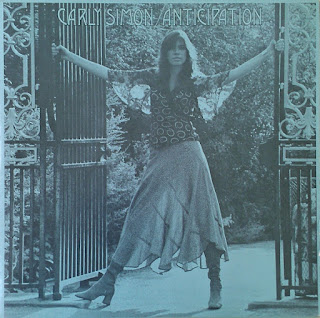
Carly Simon — “Anticipation” (#13). Elektra 45759. Top 40 debut: 1/1/72. Peak date: 2/12/72. Written by Carly Simon. Produced by Paul Samwell-Smith. B-side: “The Garden.” LP: Anticipation. Charts: Billboard Hot 100 (#13), Easy Listening (#3).

Carly Simon’s debut single (“That’s the Way I Always Heard It Should Be, #10 in 1971), a quiet ballad with a big, Bacharach-style chorus, broke new ground for pop songs by looking at relationships from a psychoanalytical perspective. Fittingly, its sophisticated musical roadmap also offered rewards to those listeners with grown-up attention spans. The record practically demanded, on its own, the creation of a radio format to be known as “adult contemporary." Simon’s next single, “Anticipation,” which led off her second album, gave it its title, and did almost as well, peaking at #13. It followed the lead of "That's the Way" by reinforcing her reputation as pop music’s star reporter in the trenches of modern romance. She had lots of material, and you can read about it in her Boys in the Trees (2015) memoir.

Here’s one tidbit: “Anticipation” came from a date night with Cat Stevens, with whom she’d often shared the stage and also a producer in former Yardbird Paul Samwell-Smith. She had cooked dinner, but because the Teaser and the Firecat album icon took his time getting there, she at least got a song written while she waited. Such a well-crafted result, which became one of the quintessential radio hits for the singer-songwriter era, says as much about her creative skills as it does about right place/right time factors. (Stevens would sing background vocals on the album’s “Julie Through the Glass.”) The radio heyday of “Anticipation” coincided with Simon winning the Best New Artist Grammy for 1971, a ceremony that also handed Carole King the Record of the Year (“It’s Too Late”) and Song of the Year (“You’ve Got a Friend”). A golden age for women singer songwriters was evidently underway.

“Anticipation,” though—and this is not in Simon’s memoir—would become best known as a Heinz ketchup TV commercial theme from 1973 well into the eighties. In the present day, hit songs rent themselves out for commercial usage as standard practice. In the sixties and seventies, it tended to go the other way around, with popular commercial themes turning into jingle singles for radio. Simon’s record, then, anticipated a whole new era in pop music marketing.

The only other single from the Anticipation album, “Legend in Your Own Time,” missed the Top 40, peaking at #50. That song was almost universally understood, especially in light of her next big hit “You’re So Vain,” as a takedown of some male subject in a “legend in your own mind” kind of way. Her memoir, though, makes clear that she wrote it, with tenderness to boot, about future husband James Taylor, whom she had met when they were much younger and whose mother, apparently, didn’t have a music career in mind for her boy. He would become a legend, then, according to his own timetable.

Side A: "Anticipation"


Side B: "The Garden"

Friday, February 27, 2015

Four Charting Versions of "Rings": Who's on the Stereo?

"Rings" was a #17 hit for Cymarron, a soft rock trio who'd later team up with Bread's Jimmy Griffin in the '90s as the Remingtons. Written by pro songwriters Eddie Reeves and Alex Harvey (not the British cult rocker), the song's lyrics toyed with telephones, doorbells, and wedding bands, and suggested that success in romantic relationships correlated with the comfort level of one's living room. Four versions of this song charted in Billboard in the early seventies, each of which altered the original line, "I've got James Taylor on the stereo," with a different artist in JT's place.

Cymarron - "Rings" (Billboard #17, entered 6/12/71)Written by Eddie Reeves and Alex Harvey. Produced by Chips Moman. 45: "Rings"/"Like Children" (Entrance 1971). LP: Rings (Entrance 1971).

Who's on the stereo? James Taylor.


Tompall and the Glaser Brothers - "Rings" (Billboard country #7, entered 9/18/1971). Written by Eddie Reeves and Alex Harvey. Produced by Jim Glaser. 45: "Rings"/"That's When I Love You the Most" (MGM 1971). LP: Rings and Things. 

Who's on the stereo? Merle Haggard.

Lobo - "Rings" (Billboard #43, entered 7/20/74). Written by Eddie Reeves and Alex Harvey. Produced by Phil Gernhard. 45: "Rings"/"I'm Only Sleeping" (Big Tree 1974). LP: Just a Singer (Big Tree 1974).

Who's on the stereo? The Allman Brothers. The B-side is a sleepy cover of the 1966 Beatles tune.


Reuben Howell - "Rings" (1974, Billboard #86). Written by Eddie Reeves and Alex Harvey. Produced by Clayton Ivey and Terry Woodford. 45: "Rings"/"I'll Be Your Brother" (Motown 1974). LP: Rings (Motown 1974).

Who's on the stereo? Jim Croce.

Reuben Howell (a Motown label Caucasian) and Lobo, by the way, both entered Billboard's Hot 100 on the same day - July 20, 1974. Both of their versions also bypassed the poignant flat-VII (coinciding with "laugh and sing") that appeared in the choruses of Cymarron's version. Why did they both surface with similar renditions exactly three years after the song's first flurry of success?

Other non-charting versions: Leo Kottke did a version of the song in 1983, expertly inserting Mel Blanc as the "on the stereo" artist but also bypassing the flat-VII. In a 1982 version by Dr. Hook, they're listening to "sweet music."  And commenter James Porter has clued me in on a 1971 version by Lonnie Mack, who sticks with James Taylor on the stereo.

Sunday, February 12, 2012

"New Jersey" (1971) and "Summer Breeze" (1972)

I’m sure it’s all water under the bridge, but I wonder how future country star Dan Seals, aka “England Dan” of duo England Dan and John Ford Coley, felt when his older brother Jim, of Seals and Crofts, stole the chord sequence and melody for the verses of Dan’s “New Jersey” (1971, #103) and used it for “Summer Breeze” (1972, #6) and had the bigger hit. Maybe they had worked out some kind of a deal. Or maybe Jim pointed out that England Dan shouldn't point the finger since he and John Ford Coley lifted the opening lick from Joe Cocker's version of  "With a Little Help from My Friends."

England Dan and John Ford Coley - "New Jersey" (1971, Billboard #103). Written by Dan Seals and John Ford Coley. Producer: Louis Shelton. 45: "New Jersey"/"Tell Her Hello" (A&M 1971). LP: England Dan and John Ford Coley (A&M 1971).

Seals and Crofts - "Summer Breeze" (Billboard #6, entered 9/9/72). Written by James Seals and Dash Crofts. Produced by Louie Shelton. 45: "Summer Breeze"/"East of Ginger Trees" (Warner 1972). LP: Summer Breeze (Warner 1972).

Both singles had the same producer...